Garage Door Making Strange Noises? Here's What Each Sound Means (And What to Do)
Published on: June 5, 2026Your garage door operates silently in the background of daily life — until it doesn't. One morning it lets out a grinding groan. Another day there's a loud bang that makes you jump in your car. A week later it's rattling every time it moves, like a bucket of bolts rolling downhill.
These noises aren't random. Every sound your garage door makes is a symptom, and each symptom points to a specific problem — some minor, some urgent. This guide breaks down the most common garage door noises, what's actually causing them, and what you should (and shouldn't) do about each one.
Grinding or Scraping Noise
A grinding or metal-on-metal scraping sound during operation is one of the most concerning noises a garage door can produce. It typically means two metal components are rubbing against each other when they shouldn't be.
What's Causing It
The most common culprits are worn or dry rollers traveling along the metal tracks, a misaligned track that causes the roller to scrape along the track wall, or a damaged roller that has lost its bearing and is dragging instead of rolling. In older doors, it can also be caused by worn hinge pins that have expanded and are grinding against the hinge bracket.
What You Can Check Yourself
Visually inspect the tracks on both sides of the door for visible bends, gaps, or sections that appear out of alignment with the vertical wall. Check the rollers — if any look flat, cracked, or wobbling, they need replacement. You can also listen carefully to identify whether the sound is coming from a single spot (likely one bad roller) or the full length of the track (likely a track alignment issue).
When to Call a Professional
If the track is visibly bent, do not attempt to force the door open or closed — this can cause the door to jump the track entirely, creating a dangerous situation and compounding the repair cost. Roller replacement and track realignment are jobs that require the right tools to be done safely. Garage Door Expert technicians can realign tracks and swap out worn rollers in a single visit without damaging the door panels or opener mechanism.
Loud Banging or Popping Sound
A sudden, loud bang — the kind that sounds like a gunshot inside your garage — is one of the most alarming sounds a door can make. Most homeowners describe it as feeling like something broke, and they're usually right.
What's Causing It
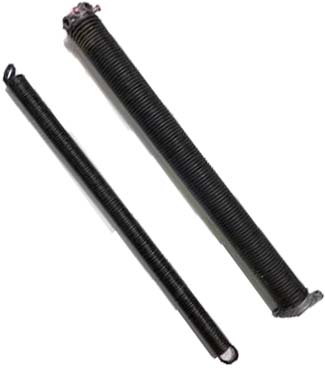
In the vast majority of cases, a loud bang from a garage door is a broken torsion spring. Torsion springs are the large coiled springs mounted horizontally above the door opening. They store mechanical tension to counterbalance the weight of the door, and they have a finite lifespan — typically 10,000 to 15,000 open/close cycles. When one breaks under full tension, the release of that stored energy produces a very sharp, loud crack.
A snapped cable can produce a similar sound, though usually slightly less violent. Cables run along the sides of the door and work in tandem with the springs to guide the door up and down.
What You Can Check Yourself
If you hear this sound, do not attempt to open or close the door manually or with the opener. Look through the window or from a safe distance. A broken torsion spring will be visibly separated — you'll see a gap in the coil where it snapped. A broken cable may be lying coiled on the floor of the garage.
When to Call a Professional
Immediately. Torsion spring replacement is one of the most dangerous DIY garage door repairs attempted by homeowners. The springs are under hundreds of pounds of tension, and improper handling has caused serious injuries. This is not an exaggeration or a sales tactic — it is a consistently documented risk. Garage Door Expert offers same-day spring repair and replacement. Do not attempt to operate a door with a broken spring or cable under any circumstances.
Squeaking or High-Pitched Squealing
A persistent squeak as the door moves is annoying but usually the least urgent noise on this list. That said, ignoring it allows the underlying issue to worsen until what was a $0 lubrication job becomes a roller or hinge replacement.
What's Causing It
Squeaking almost always comes from dry friction. The rollers, hinges, or spring coils have lost their lubrication and are metal-on-metal without a protective layer. Springs can also squeak as they compress and extend if they haven't been lubricated in a long time. Older nylon rollers are less prone to this than steel rollers, but both can squeak when dry.
What You Can Check Yourself
This is one case where homeowners can often resolve the issue themselves. Apply a garage door-specific lubricant (not WD-40, which is a solvent and will actually dry out the components further) to the rollers, hinges, and the spring coils. A silicone-based spray or lithium-based grease works well. Avoid the track itself — lubricating the track makes it too slippery and can cause control issues.
Apply, run the door up and down two or three times, and listen. If the squeak reduces significantly, you've solved it. If it persists or returns within a few days, the component may be worn beyond what lubrication can fix.
When to Call a Professional
If lubrication doesn't resolve the squeak within one or two applications, schedule an inspection. Continuing to operate a squeaking door without addressing the root cause accelerates wear on rollers and hinges, and what costs a service call now could become a panel or opener issue later.
Rattling During Operation
Rattling is different from grinding — it's more of a loose, vibrating sound rather than a metal-contact scrape. It typically happens while the door is moving, and sometimes continues briefly after it stops.
What's Causing It
The most common causes of rattling are loose hardware — specifically the nuts and bolts that hold the track brackets, hinges, and other mounting hardware to the door and wall. Over thousands of open/close cycles, vibration gradually works fasteners loose. Rattling can also come from a loose chain or belt on the opener drive system, loose opener mounting hardware on the ceiling, or even a misaligned photo-eye sensor that's vibrating against its bracket.
What You Can Check Yourself
With the door closed and the power to the opener disconnected, visually inspect all visible bolts and bracket screws along the tracks and hinges. If you find loose ones, tighten them with the appropriate socket or wrench. Don't over-tighten — snug is enough. Also check the opener unit itself on the ceiling — the mounting bolts can loosen over time, causing the entire unit to vibrate.
When to Call a Professional
If tightening visible hardware doesn't eliminate the rattle, or if you notice sections of the track visibly shifting during operation, schedule an inspection. Loose track brackets that are left too long can allow the track to drift out of alignment, which escalates into the grinding and scraping issues described earlier.
Clicking or Clunking at the Top or Bottom of Travel
If your door makes a distinct click or clunk specifically when it reaches the fully open or fully closed position — not throughout the whole range of motion — the issue is usually in the opener or the limit settings rather than the door hardware itself.
What's Causing It
Most garage door openers have travel limit settings that tell the motor when to stop. If these limits are set incorrectly, the motor continues to push against a door that has already fully closed or opened, causing the opener to strain and the chain or belt to clunk as it absorbs the excess tension. A clicking sound at the very end of travel can also indicate a worn sprocket inside the opener unit.
What You Can Check Yourself
Check whether the door is fully seated on the ground when it closes — if there's a gap, the limit may be set too short. If the door reverses unexpectedly right before it touches the ground, the down-limit is set too far. Most LiftMaster and Chamberlain openers have clearly labeled limit adjustment screws on the back or side panel of the unit. Consult your opener's manual for the specific adjustment procedure.
When to Call a Professional
If limit adjustments don't resolve the clunking, or if the opener is straining noticeably — running slowly, making a struggling motor sound, or triggering the auto-reverse function — the opener itself may need servicing or replacement. Garage Door Expert installs and services LiftMaster and Chamberlain openers and can diagnose whether the issue is a simple limit adjustment, a worn drive component, or a failing motor.
Vibrating or Rumbling While Running
A low rumble or sustained vibration throughout the door's full range of motion — not just at one point — is typically an opener drive issue rather than a door hardware issue.
What's Causing It
Chain-drive openers are inherently louder than belt-drive or direct-drive units and produce a characteristic rumble that homeowners often mistake for a problem. If the chain is sagging or has too much slack, the rumble becomes more pronounced and the chain may slap against the chain rail during operation. A loose opener mounting can amplify any vibration from the motor into a room-filling rumble via the ceiling structure.
What You Can Check Yourself
Look at the opener chain when the door is stationary. It should have a slight sag — roughly half an inch below the bottom of the rail at its lowest point. More than that indicates the chain needs adjustment. The tension adjustment is usually a bolt or nut on the chain trolley assembly. Check your opener manual for the specific procedure.
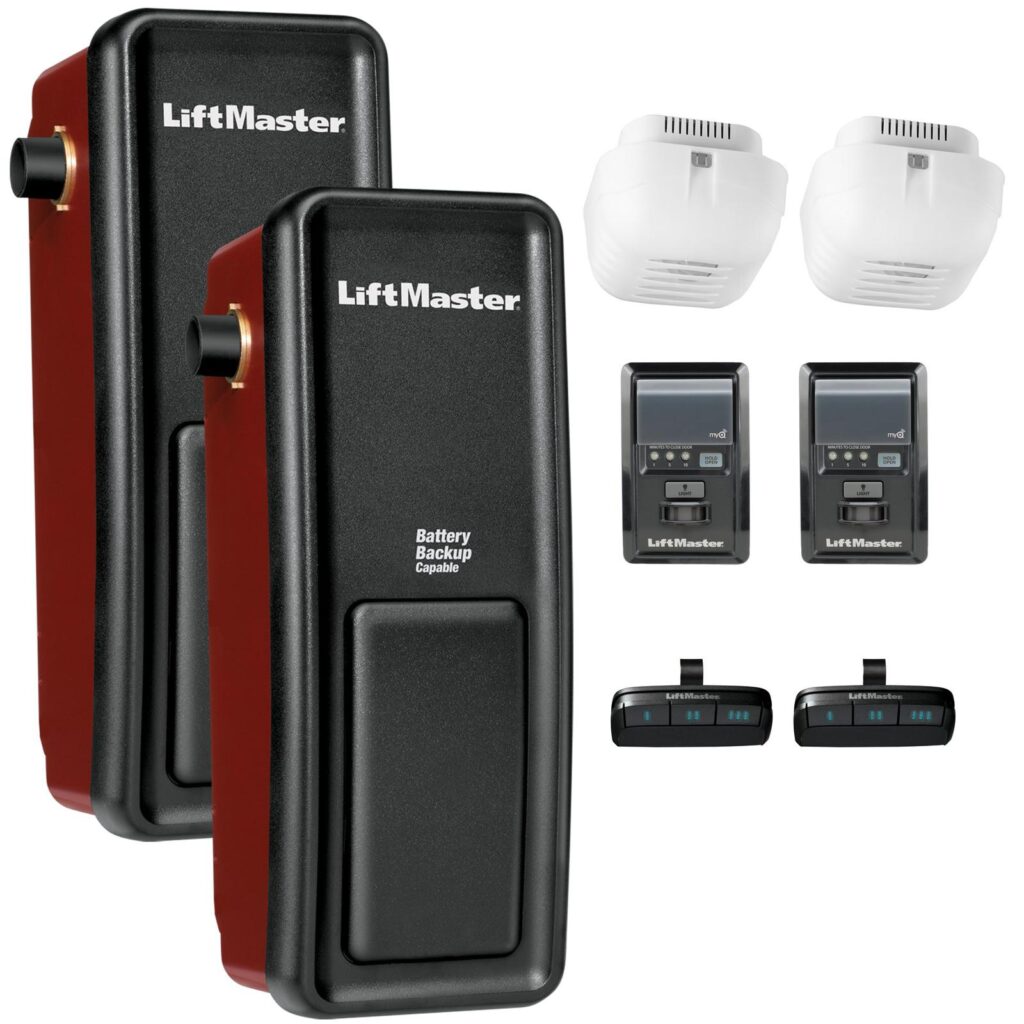
If you want to significantly reduce noise and vibration long-term, consider that belt-drive and wall-mount (jackshaft) openers like the LiftMaster 8500 are substantially quieter than chain-drive models — they transmit far less vibration into the home structure.
When to Call a Professional
If chain adjustment doesn't reduce the rumble, or if the vibration is accompanied by any jerky or inconsistent door movement, have a technician inspect the drive system. A worn sprocket or damaged chain can eventually cause the opener to fail mid-cycle — leaving the door stuck open or half-open.
Noise That Appears Only in Cold Weather
This is a specific seasonal pattern that Northern Virginia homeowners encounter regularly, and it's worth addressing separately because it's often misdiagnosed.
What's Causing It
Cold temperatures cause metal components to contract slightly, which can tighten the tracks and make rollers stiffer. More significantly, cold weather thickens the lubricants on springs and rollers, reducing their effectiveness. Torsion springs become more brittle in cold weather, which is why spring failures spike in winter months — a spring that's been slowly fatiguing all year may snap on a cold January morning when the metal contracts under load.
What You Can Check and Prevent
Apply fresh lubricant to rollers, hinges, and springs before cold weather sets in each fall. Use a lubricant rated for low-temperature use. If the door is moving noticeably slower in cold weather, check whether the opener's force setting needs a slight increase — most openers allow you to adjust the force the motor applies.
When to Call a Professional
If your door struggles significantly in cold weather despite fresh lubrication, or if it refuses to open at all on very cold mornings, have a technician evaluate the spring tension and overall system condition before winter sets in fully. A proactive service visit in October is far less disruptive than an emergency call on a frozen February morning when you can't get your car out.
When Any Noise Means Call Now
Regardless of what specific sound your door is making, there are certain situations where you should stop using the door and call for service immediately:
- The door reverses on its own without you triggering it
- The door moves unevenly — one side higher than the other
- You can see a cable off its drum or lying on the garage floor
- You see a visible gap in a torsion spring coil
- The door is physically stuck and will not move in either direction
- You hear the opener motor running but the door is not moving
These are all signs of a mechanical failure that will not self-resolve and will almost certainly get worse with each additional cycle.
Why Northern Virginia Homeowners Trust Garage Door Expert
At Garage Door Expert, we've been diagnosing and fixing garage door problems across Fairfax, Reston, Annandale, Springfield, and surrounding communities for over 10 years. We carry parts for springs, cables, rollers, tracks, drums, hinges, and panels in our service vehicles — which means most repairs are completed in a single visit without a parts delay.
We service all major opener brands including LiftMaster, Chamberlain, Craftsman, and Amarr, and we install Clopay doors for homeowners who decide a replacement is the smarter long-term investment over repeated repairs.
Our hours are 6:30 AM to 9:00 PM, seven days a week — because garage door problems don't stick to business hours.
Hearing something you can't explain? Call us at (703) 383-4322 for a same-day diagnosis and free estimate.


New Garage Door




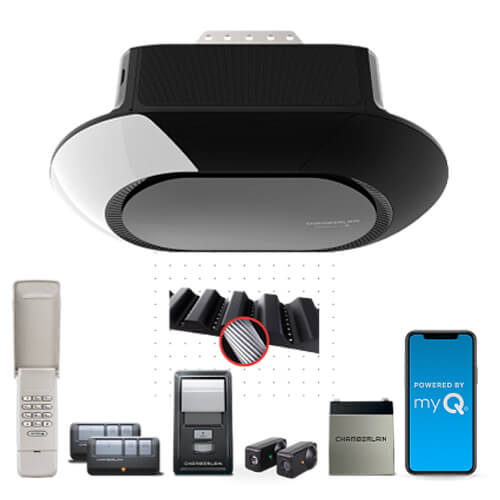
Garage Door Openers
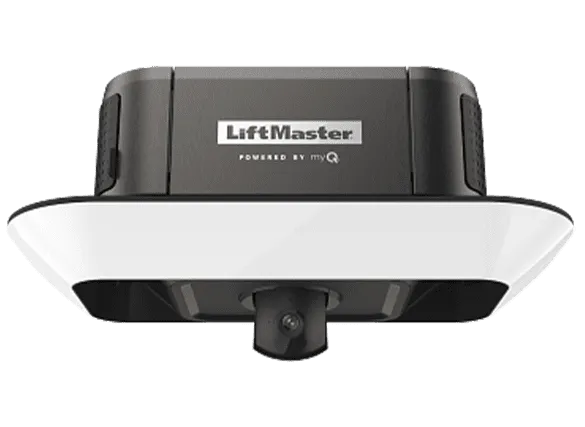
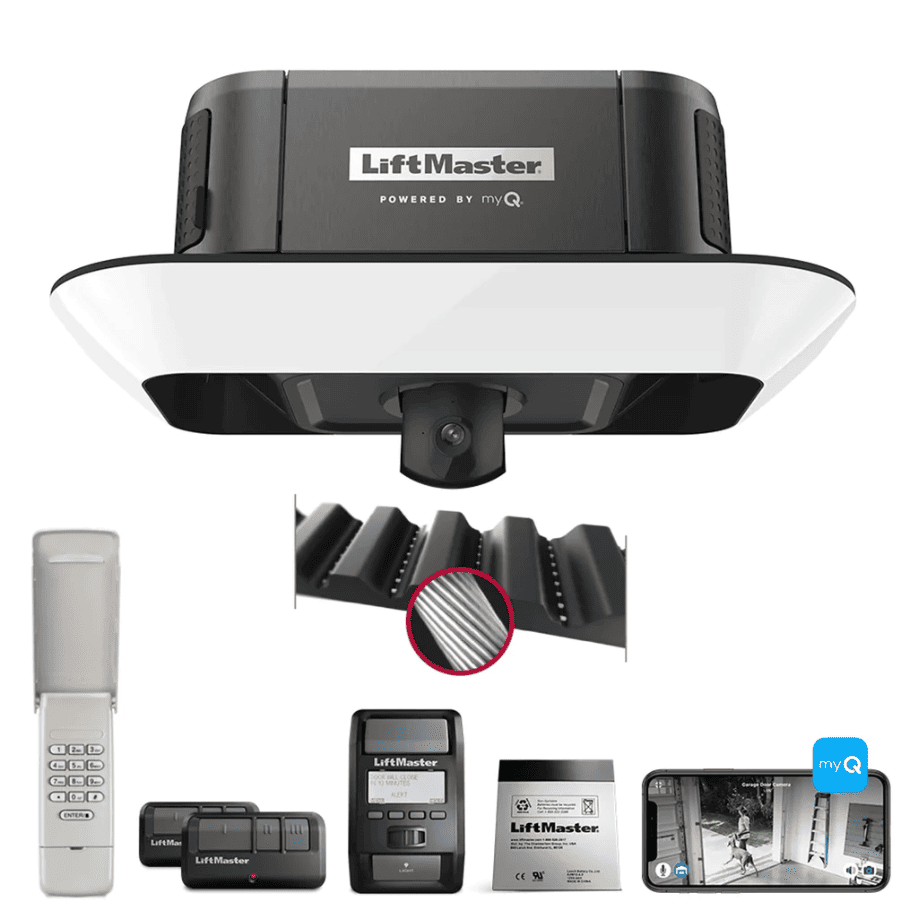
Secure View™ Smart Garage Opener with Camera, LED Lighting, Battery Backup, Ultra-Quiet Drive
VIEW MORE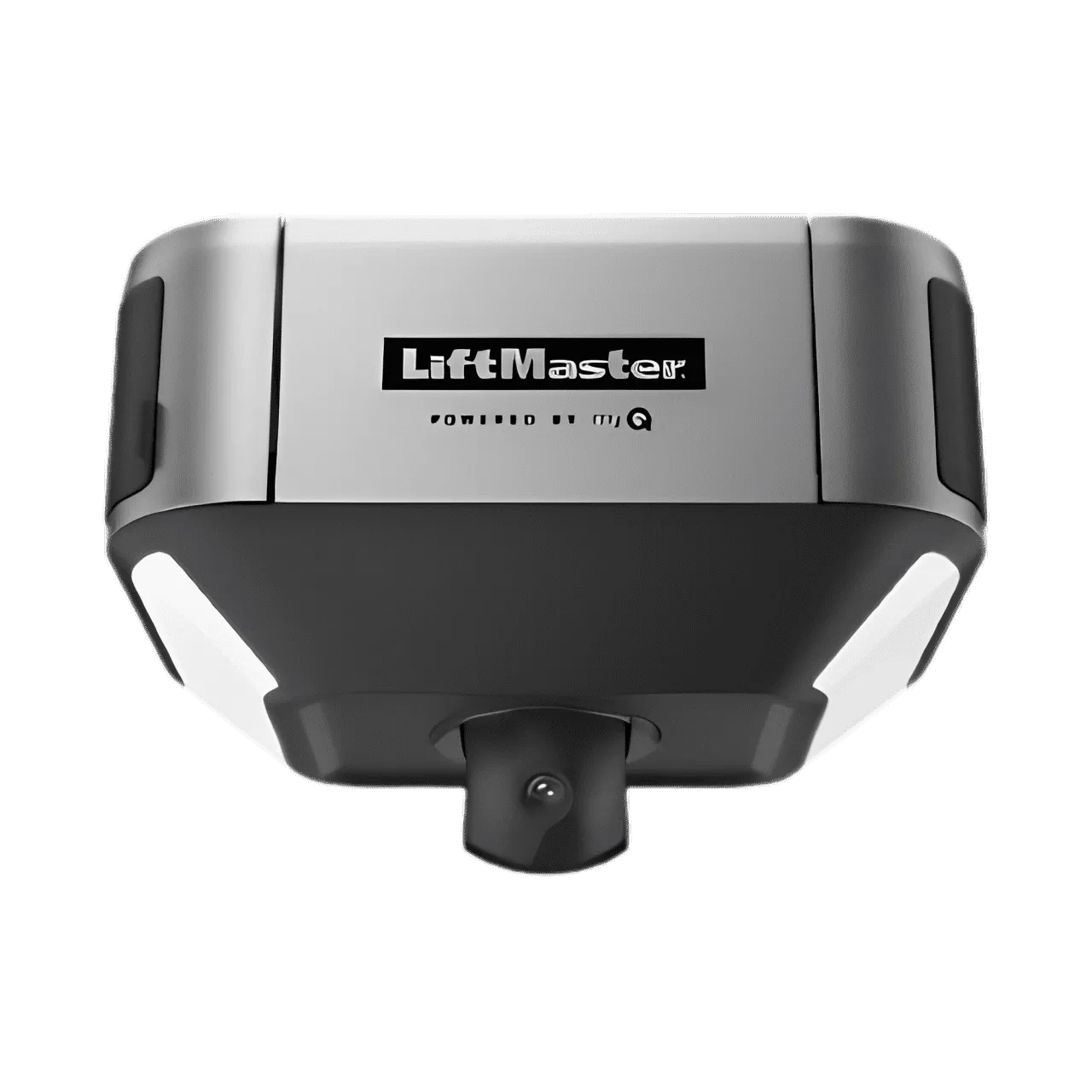
Secure View™ Ultra-Quiet Belt Drive Smart Opener with Camera and Dual LED Lighting | LiftMaster
VIEW MORE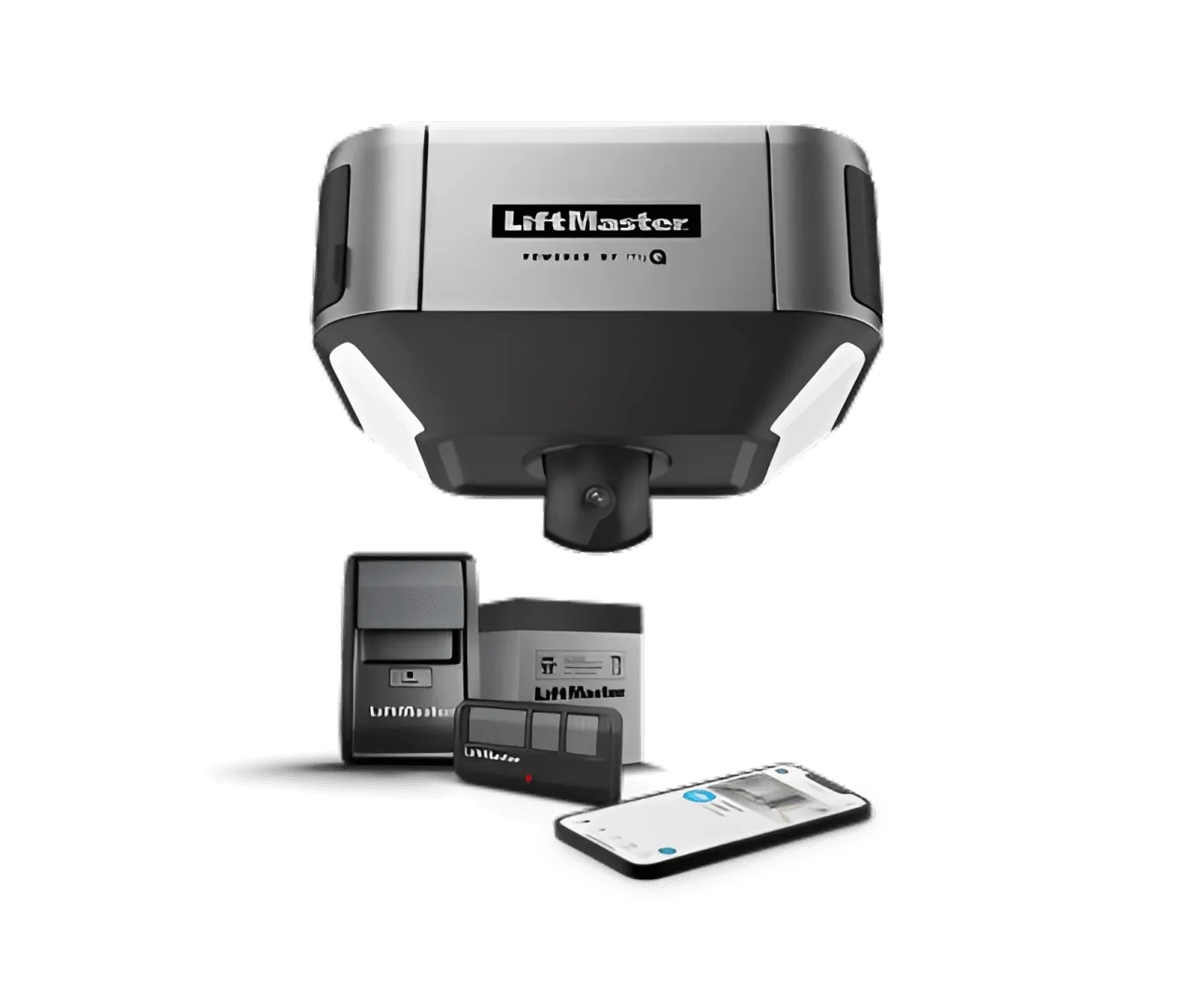
Secure View™ Ultra-Quiet, Belt Drive, Smart Opener with Camera, Dual LED Lighting™ & Battery Backup
VIEW MORE
Elite Series DC Battery Backup Wall Mount Wi-Fi Garage Door Opener | LiftMaster
VIEW MOREOur Featured Services
Garage Door Expert Services Near You.
Cities We Serve.
Garage Door Repair & Installation,
Loudoun County
Garage Door Repair & Installation,
Prince William County
Garage Door Repair & Installation,
Aldie, VA
Garage Door Repair & Installation,
Alexandria, VA
Garage Door Repair & Installation,
Arcola, VA
Garage Door Repair & Installation,
Arlington, VA
Garage Door Repair & Installation,
Ashburn, VA
Garage Door Repair & Installation,
Brambleton, VA
Garage Door Repair & Installation,
Bristow, VA
Garage Door Repair & Installation,
Burke, VA
Garage Door Repair & Installation,
Clifton, VA
Garage Door Repair & Installation,
Fairfax Station, VA
Garage Door Repair & Installation,
Fairfax, VA
Garage Door Repair & Installation,
Falls Church, VA
Garage Door Repair & Installation,
Gainesville, VA
Garage Door Repair & Installation,
Great Falls, VA
Garage Door Repair & Installation,
Haymarket, VA
Garage Door Repair & Installation,
Herndon, VA
Garage Door Repair & Installation,
Lansdowne, VA
Garage Door Repair & Installation,
Leesburg, VA
Garage Door Repair & Installation,
McLean, VA
Garage Door Repair & Installation,
Middleburg, VA
Garage Door Repair & Installation,
Oakton, VA
Garage Door Repair & Installation,
Potomac Falls, VA
Garage Door Repair & Installation,
Purcellville, VA
Garage Door Repair & Installation,
Reston, VA
Garage Door Repair & Installation,
South Riding, VA
Garage Door Repair & Installation,
Springfield, VA
Garage Door Repair & Installation,
Sterling, VA
Garage Door Repair & Installation,
Tysons, VA

Excellent service! He arrived on time, repaired my garage quickly, and clearly knows his job very well. The work was done professionally, and his price was very competitive. I highly recommend him to anyone looking for reliable and affordable garage repair services.

I had a great experience, and highly recommend this company! I called Sean (the owner) at 10am on a Saturday, and he came to our house the same day 3 hours later. Our garage door seemed to be on the verge of dying, but Sean diagnosed the problem precisely and never tried to upsell us. I thought the repairs would be a lot more expensive, but he quoted us far less than we expected. He told us that certain things could be deferred until later, but some things needed to be done now. That is the mark of a true professional, and we appreciated him being honest with us throughout the process. I found my new go-to person for garage door repairs!

I can’t say enough great things about Sean. My insurance company quoted me thousands to fix my garage door, and Sean came in, assessed everything, and gave me an absolutely unbeatable price literally saved me so much money.
Not only is he incredibly skilled, but he’s also one of the nicest, most humble people I’ve met. He walked me through everything, fixed the issue quickly, and made sure I understood what was going on the whole time.
If you’re looking for someone honest, dependable, and genuinely caring about his customers, Sean is your guy. Incredible service, incredible company, and truly a 10/10 experience. I’m extremely grateful and will recommend him to everyone I know.

Shawn was amazing. He didn’t over charge and was extremely accurate in his work and made sure everything was working correctly before he left. He also provided free advice on how to maintain my doors. I recommend his services to anyone that needs anything that has to do with garage doors.

Sean was knowledgeable, professional, and fast. He immediately diagnosed the problem and fixed it at a very reasonable price. He was also extremely responsive to calls and text messages. Great service all around, would highly recommend!
Frequently Asked Questions
What does a grinding noise from a garage door usually mean?
A grinding or scraping sound usually means worn or dry rollers are rubbing against the track, or the track itself is misaligned. Roller replacement and track realignment should be handled by a professional technician.
Is a loud bang from a garage door dangerous?
Yes. A loud bang from a garage door is almost always a broken torsion spring. Do not attempt to operate the door. Torsion springs are under extreme tension and must be replaced by a certified technician immediately.
Request For Estimate.
Have A Garage Door Problem? Time For A New Garage Door?