Why Does My Garage Door Close Then Open Again? 7 Possible Causes and What to Do
Published on: September 17, 2026You press the garage door opener, watch the door move down normally, and expect it to close. Instead, just as the door reaches the floor, it suddenly reverses and opens again. If this happens repeatedly, it can be frustrating and may leave your garage unsecured.
A garage door that closes and then immediately opens is usually responding to a problem detected by the opener system. In many cases, the cause is something relatively simple, such as dirty safety sensors or an obstruction near the bottom of the door. However, the problem can also come from the tracks, rollers, springs, limit settings, or the garage door opener itself.
The important thing is not to keep forcing the door to close. Understanding why the door is reversing can help you identify the problem and determine whether it's something you can safely address yourself or whether professional garage door repair is needed.
1. The Safety Sensors May Be Dirty or Misaligned
One of the most common reasons a garage door closes and then opens again is a problem with the safety sensors.
Most modern automatic garage door openers use two sensors positioned near the bottom of the garage door tracks. They create an invisible beam between them. If the opener detects that this beam has been interrupted while the door is closing, it may reverse the door to prevent injury or damage.
Even when nothing is actually blocking the doorway, dirt, dust, spider webs, moisture, or other debris can interfere with the sensors.
Start by looking at both sensors. They should face each other directly and normally have indicator lights that show whether they are communicating correctly. If one sensor appears crooked or has been bumped out of position, carefully check whether it has shifted on its mounting bracket.
You can also clean the sensor lenses gently with a soft, dry cloth. Avoid using harsh cleaning products or spraying liquid directly onto the sensors. If the sensors continue to show an error after cleaning and alignment, there may be a wiring or sensor problem that requires further diagnosis.
2. Something May Be Blocking the Door's Closing Path
Sometimes the garage door is doing exactly what it is supposed to do.
Look carefully around the entire area where the door meets the floor. A small object can trigger the safety system or physically interfere with the door. A storage box, tool, piece of wood, bicycle, loose item, or even accumulated dirt near the threshold can cause trouble.
Do not only inspect the center of the doorway. Check both sides of the door and the areas around the tracks as well. Another issue can occur when something is attached to or hanging near the bottom section of the garage door. Even if the obstruction seems minor, the opener may detect increased resistance or interpret the situation as unsafe.
Remove anything that could interfere with the door and test it again. If the door still reverses at the same point, the cause may be mechanical or related to the opener settings.
3. The Close-Limit Setting May Be Incorrect
Your garage door opener has settings that determine how far the door should travel when opening and closing. These are commonly referred to as travel or limit settings.
If the close-limit setting is incorrect, the opener may think the door has traveled farther than it should. When the door reaches the floor, the opener can interpret the resistance as an obstruction and immediately reverse the door.
This can happen after changes to the opener, maintenance work, component replacement, or gradual mechanical changes in the garage door system. The exact adjustment procedure varies depending on the opener model. Because changing travel settings incorrectly can create another safety problem, it is better to consult the manufacturer's instructions before making adjustments.
If you are unsure why the setting has changed or the door requires repeated adjustment, a garage door opener repair professional can inspect the complete system rather than simply changing the opener setting.
4. The Garage Door Tracks May Be Bent or Misaligned
A garage door is designed to move along tracks with relatively consistent resistance. If one of the tracks is bent, loose, damaged, or out of alignment, the door may encounter extra resistance as it approaches the floor.
You may notice that the door closes normally at first but becomes slower or noisier near the bottom. In some cases, it reaches the floor and then reverses.
Look at the vertical tracks on both sides of the door. They should appear straight and properly positioned. Check for obvious dents, gaps, loose hardware, or areas where the rollers appear to rub against the track. However, avoid attempting to bend a garage door track back into position yourself. Garage doors are heavy, and the tracks work together with rollers, cables, drums, and springs. A seemingly small adjustment can affect the balance and movement of the entire system.
Professional garage door track repair is generally the safer choice when there is visible damage or significant misalignment.
5. Worn Rollers, Hinges, or Other Hardware Can Increase Resistance
Garage doors contain many moving parts. Rollers move through the tracks, hinges connect the door sections, and other hardware allows the door to bend and travel smoothly. When these components become worn, damaged, rusty, or excessively tight, the door may require more force to move.
You might hear squeaking, grinding, popping, or scraping noises before the door reverses. The door may also appear to shake or move unevenly.
This is one reason a garage door should not be evaluated only by looking at the opener. The opener is responsible for moving the door, but the door itself needs to move properly for the opener to operate safely. A worn roller or damaged hinge can sometimes be replaced as part of routine garage door maintenance. If several components are showing signs of wear, however, a complete inspection can help identify the underlying cause before the problem becomes more serious.
6. The Garage Door Springs May Be Weak or Damaged
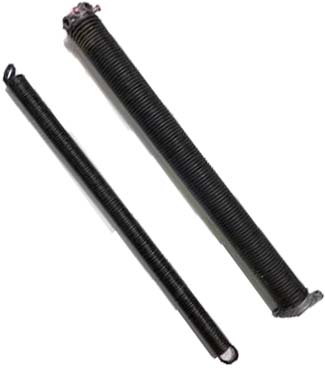
Garage door springs do much of the heavy lifting involved in raising and lowering the door. Over time, springs lose tension and eventually wear out. When a spring becomes weak or breaks, the door can become difficult for the opener to move. The opener may detect unusual resistance and reverse the door.
A broken spring often comes with other noticeable signs. The garage door may suddenly feel much heavier, the opener may struggle, or you may hear a loud snap when the spring breaks. With a torsion spring system, you may also see a visible gap in the spring.
Spring problems should be treated seriously. Garage door springs are under substantial tension, and attempting to remove, adjust, or replace them without the proper equipment and experience can result in serious injury. If the door has suddenly become heavy or you suspect a broken spring, stop repeatedly operating the door and arrange for a professional inspection. Garage Door Expert offers same-day spring repair and replacement so you never have to take that risk.
7. The Garage Door Opener May Have a Mechanical or Electrical Problem
If the sensors, tracks, and door hardware appear to be in good condition, the opener itself may be responsible.
Garage door openers contain motors, gears, circuit boards, limit controls, wiring, and other components. A failing component can cause the opener to behave unpredictably. For example, the opener may start normally but fail to correctly determine the door's position. It may also have a worn gear, damaged circuit board, faulty wiring, or another internal problem.
You may notice additional symptoms such as unusual clicking, humming, inconsistent operation, lights flashing, or the opener working correctly one time and reversing the next. Modern smart garage door openers can also experience connectivity or control issues, although a door physically reversing at the bottom is more often associated with the opener's safety, travel, or mechanical systems than with a simple Wi-Fi connection problem.
If the opener is showing an error code, check the manufacturer's instructions for that specific model. Avoid opening the motor housing or attempting electrical repairs unless you are qualified to do so.
What Should You Check First?
If your garage door closes and immediately opens again, start with the simplest possibilities.
Look around the doorway for an obstruction and make sure nothing is interfering with the door. Next, inspect the safety sensors near the bottom of the tracks. Clean the lenses and make sure both sensors are facing each other properly.
After that, pay attention to how the door moves. Does it become slow near the floor? Does it shake? Is there grinding or scraping? Does one side appear to move differently from the other? These observations can provide useful clues.
If the door moves smoothly but consistently reverses at the exact same point, the opener's travel or limit settings could be involved. If the door feels unusually heavy or difficult to move, the springs or another mechanical component may need attention.
Why You Shouldn't Keep Forcing the Door to Close
When a garage door reverses, it is tempting to hold down the wall button or repeatedly press the remote until the door stays closed. This is not a good long-term solution.
The automatic reversal system is an important safety feature. If the opener believes that the door has encountered an obstruction or another unsafe condition, repeatedly overriding that behavior can create unnecessary risk. It can also place additional strain on the opener, springs, cables, rollers, tracks, and other components.
If the door only closes when you continuously hold the wall control, or if it behaves differently depending on how you operate it, the system should be inspected rather than repeatedly overridden.
Can You Fix a Garage Door That Reverses on Your Own?
Some basic troubleshooting is reasonable for a homeowner. Cleaning the safety sensors, removing an obvious obstruction, checking for loose objects around the door, and inspecting the area for visible problems are generally simple first steps.
More complicated repairs are different. Garage door springs, cables, drums, tracks, and opener components can involve heavy loads, stored energy, or electrical components. A mistake during repair can damage the door or create a serious safety hazard.
If cleaning and basic inspection do not solve the problem, professional garage door repair is usually the better option. A technician can inspect the complete door system rather than assuming that the opener is the only problem. This is particularly important when the door is heavy, uneven, noisy, damaged, or difficult to move manually.
When Should You Call a Garage Door Professional?
You should consider professional service if the door continues reversing after the sensors have been cleaned and checked, especially when the problem occurs consistently.
Professional attention is also recommended if you notice a broken spring, loose or damaged cables, bent tracks, damaged rollers, a door that is hanging unevenly, or an opener that is making unusual noises.
If the garage door has become significantly heavier than usual, do not continue testing it repeatedly with the automatic opener. A spring or counterbalance problem could be involved. A garage door professional can inspect the springs, cables, rollers, hinges, tracks, opener, safety sensors, and travel settings to determine why the door is reversing.
How to Prevent the Problem From Coming Back
Regular garage door maintenance can help reduce the chance of unexpected problems. The goal is not simply to repair a component after it fails but to identify wear before it affects the entire system.
Keep the area around the garage door clear and periodically check the safety sensors for dirt or damage. Pay attention to changes in the way the door sounds or moves. A new grinding noise, uneven movement, hesitation, or unusual vibration can be an early warning sign.
It is also helpful to have the garage door inspected when components begin showing significant wear. Rollers, hinges, cables, springs, and other parts do not last indefinitely, and replacing worn components before they fail can help keep the door operating more reliably.
Final Thoughts
A garage door that closes and then opens again is usually trying to tell you that something needs attention. The cause may be as simple as a dirty safety sensor or an object blocking the door, but it can also indicate a problem with the tracks, rollers, springs, travel settings, or opener.
Start with basic visual checks and sensor cleaning. If the problem remains, avoid repeatedly forcing the door closed or making adjustments you are not comfortable performing. At Garage Door Expert, we serve Fairfax, Reston, Annandale, Springfield, and surrounding Northern Virginia communities seven days a week, from 6:30 AM to 9:00 PM. A properly working garage door should close smoothly, remain closed, and respond consistently to its opener controls — identifying the cause early can help prevent a small repair from turning into a larger and more expensive garage door problem.
Call us at (703) 383-4322 for a same-day diagnosis and free estimate.


New Garage Door




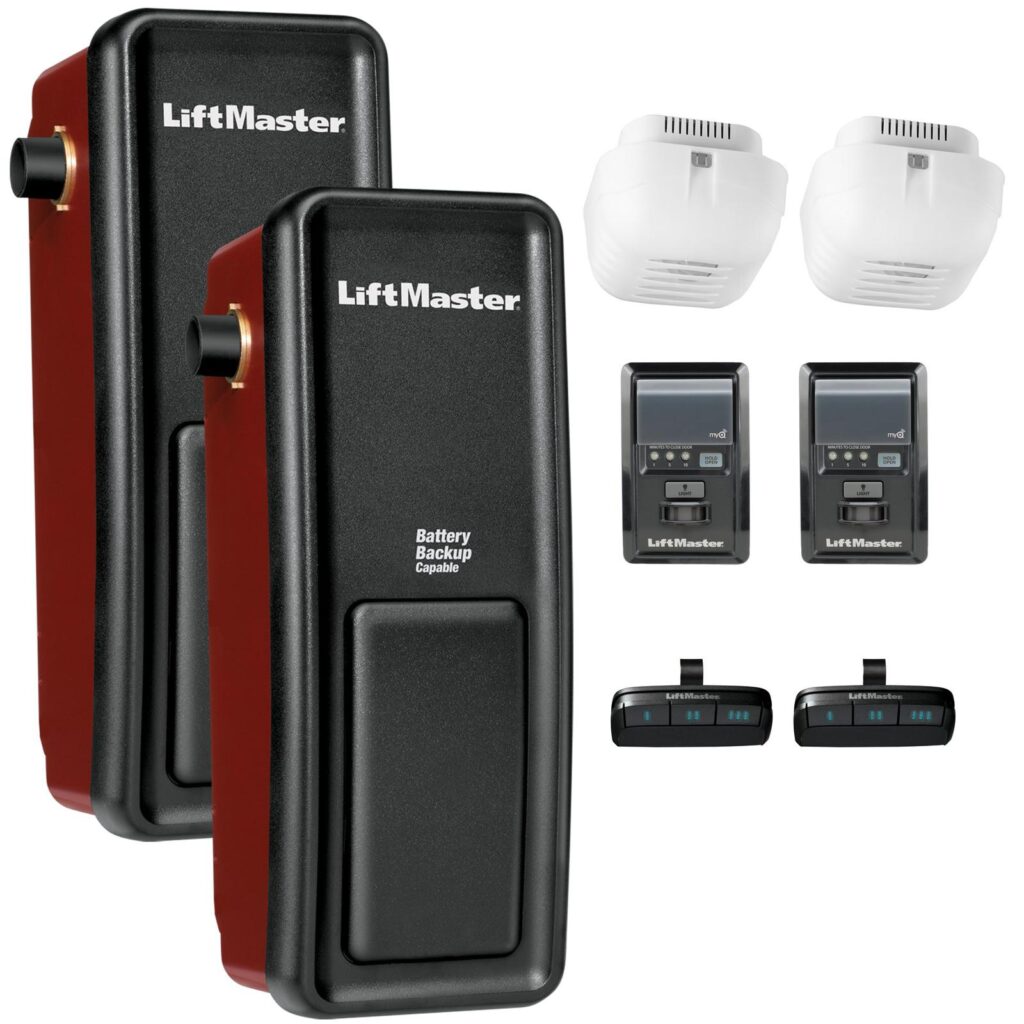
Garage Door Openers
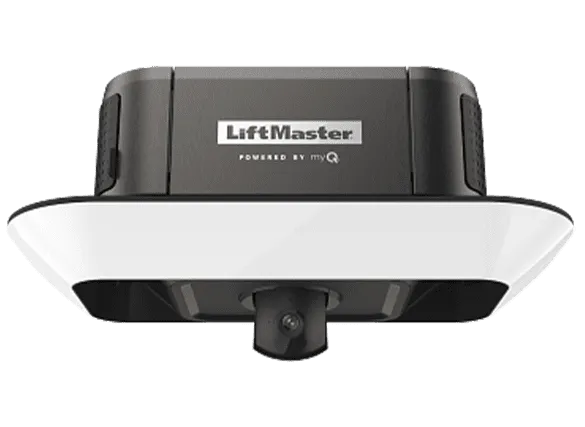
Secure View™ Smart Garage Opener with Camera, LED Lighting, Battery Backup, Ultra-Quiet Drive
VIEW MORE
Secure View™ Ultra-Quiet Belt Drive Smart Opener with Camera and Dual LED Lighting | LiftMaster
VIEW MORE
Secure View™ Ultra-Quiet, Belt Drive, Smart Opener with Camera, Dual LED Lighting™ & Battery Backup
VIEW MORE
Elite Series DC Battery Backup Wall Mount Wi-Fi Garage Door Opener | LiftMaster
VIEW MOREOur Featured Services
Garage Door Expert Services Near You.
Cities We Serve.
Garage Door Repair & Installation,
Loudoun County
Garage Door Repair & Installation,
Prince William County
Garage Door Repair & Installation,
Aldie, VA
Garage Door Repair & Installation,
Alexandria, VA
Garage Door Repair & Installation,
Arcola, VA
Garage Door Repair & Installation,
Arlington, VA
Garage Door Repair & Installation,
Ashburn, VA
Garage Door Repair & Installation,
Brambleton, VA
Garage Door Repair & Installation,
Bristow, VA
Garage Door Repair & Installation,
Burke, VA
Garage Door Repair & Installation,
Clifton, VA
Garage Door Repair & Installation,
Fairfax Station, VA
Garage Door Repair & Installation,
Fairfax, VA
Garage Door Repair & Installation,
Falls Church, VA
Garage Door Repair & Installation,
Gainesville, VA
Garage Door Repair & Installation,
Great Falls, VA
Garage Door Repair & Installation,
Haymarket, VA
Garage Door Repair & Installation,
Herndon, VA
Garage Door Repair & Installation,
Lansdowne, VA
Garage Door Repair & Installation,
Leesburg, VA
Garage Door Repair & Installation,
McLean, VA
Garage Door Repair & Installation,
Middleburg, VA
Garage Door Repair & Installation,
Oakton, VA
Garage Door Repair & Installation,
Potomac Falls, VA
Garage Door Repair & Installation,
Purcellville, VA
Garage Door Repair & Installation,
Reston, VA
Garage Door Repair & Installation,
South Riding, VA
Garage Door Repair & Installation,
Springfield, VA
Garage Door Repair & Installation,
Sterling, VA
Garage Door Repair & Installation,
Tysons, VA

Excellent service! He arrived on time, repaired my garage quickly, and clearly knows his job very well. The work was done professionally, and his price was very competitive. I highly recommend him to anyone looking for reliable and affordable garage repair services.

I had a great experience, and highly recommend this company! I called Sean (the owner) at 10am on a Saturday, and he came to our house the same day 3 hours later. Our garage door seemed to be on the verge of dying, but Sean diagnosed the problem precisely and never tried to upsell us. I thought the repairs would be a lot more expensive, but he quoted us far less than we expected. He told us that certain things could be deferred until later, but some things needed to be done now. That is the mark of a true professional, and we appreciated him being honest with us throughout the process. I found my new go-to person for garage door repairs!

I can’t say enough great things about Sean. My insurance company quoted me thousands to fix my garage door, and Sean came in, assessed everything, and gave me an absolutely unbeatable price literally saved me so much money.
Not only is he incredibly skilled, but he’s also one of the nicest, most humble people I’ve met. He walked me through everything, fixed the issue quickly, and made sure I understood what was going on the whole time.
If you’re looking for someone honest, dependable, and genuinely caring about his customers, Sean is your guy. Incredible service, incredible company, and truly a 10/10 experience. I’m extremely grateful and will recommend him to everyone I know.

Shawn was amazing. He didn’t over charge and was extremely accurate in his work and made sure everything was working correctly before he left. He also provided free advice on how to maintain my doors. I recommend his services to anyone that needs anything that has to do with garage doors.

Sean was knowledgeable, professional, and fast. He immediately diagnosed the problem and fixed it at a very reasonable price. He was also extremely responsive to calls and text messages. Great service all around, would highly recommend!
Frequently Asked Questions
Why does my garage door close and then immediately open?
The most common causes include dirty or misaligned safety sensors, an obstruction, incorrect close-limit settings, increased resistance from damaged tracks or rollers, spring problems, or an issue with the garage door opener.
Why does my garage door touch the floor and then go back up?
If the door reaches the floor and immediately reverses, the opener may be detecting excessive resistance or incorrectly interpreting the door's position. Safety sensor problems and incorrect travel settings are common possibilities, but mechanical problems can also cause the behavior.
Why does my garage door only reverse sometimes?
An intermittent problem can be caused by sensor alignment, loose wiring, changing resistance in the door hardware, worn components, or an opener that is beginning to fail. Because the problem is inconsistent, it can be useful to observe exactly when the reversal occurs and whether weather, temperature, or the door's position changes the behavior.
Can dirty garage door sensors cause the door to open again?
Yes. Dirt, dust, spider webs, or misalignment can interfere with the safety sensors. Cleaning the lenses and checking that both sensors face each other correctly is a good first troubleshooting step.
Should I replace both garage door springs if one is broken?
In many cases, professionals recommend replacing both springs when they are part of the same system and have similar age and usage. The appropriate approach depends on the door's spring configuration and the condition of the existing components.
Is it safe to repair a garage door spring myself?
Garage door springs can store a significant amount of energy. Torsion and extension spring repairs require the correct tools and procedures. For safety, spring replacement and adjustment are best handled by a qualified garage door professional.
Why does my garage door work normally when I use the wall button but reverse when using the remote?
If the behavior differs between controls, the remote, wall control, opener settings, or another part of the control system may be involved. However, if the door physically reaches the floor and reverses, the underlying issue may still be related to the opener's safety or travel system rather than the remote itself.
Request For Estimate.
Have A Garage Door Problem? Time For A New Garage Door?